

Ever wondered how croissants get those insanely flaky layers and that dreamy honeycomb interior? It's all in the lamination—the magical process of folding butter into dough to create hundreds of thin, alternating layers. When baked, the butter melts and creates steam, puffing up the dough into light, airy perfection. Let's dive into the techniques! ✨


What is Lamination? The Science Behind the Flakes
Lamination involves enclosing a block of butter (beurrage) in yeasted dough (détrempe), then repeatedly rolling and folding to build thin layers of dough separated by butter. During baking, water in the butter turns to steam, pushing the layers apart for that signature lift and crunch.
Pro tip: Use high-fat European-style butter for better flavor and pliability. Keep everything cold—dough and butter should have similar consistency to avoid melting or cracking.
Step-by-Step Lamination Process
- Prepare the Détrempe (Base Dough): Mix flour, yeast, milk, sugar, salt, and a bit of butter into a smooth dough to chill overnight.
- Make the Butter Block: Shape cold butter into a flat rectangle (often between parchment) for easy handling.


3. Encase the Butter (Lock-In): Roll dough into a larger rectangle or square. Place butter in the center and fold dough over it like an envelope.
4. Perform the Turns (Folds): Roll out → fold → chill. Repeat 3 times typically.
- Single/Letter Fold (tri-fold): Fold like a business letter → creates 3 layers per turn.
- Book/Double Fold (quad-fold): Fold ends to center, then in half → creates 4 layers per turn.

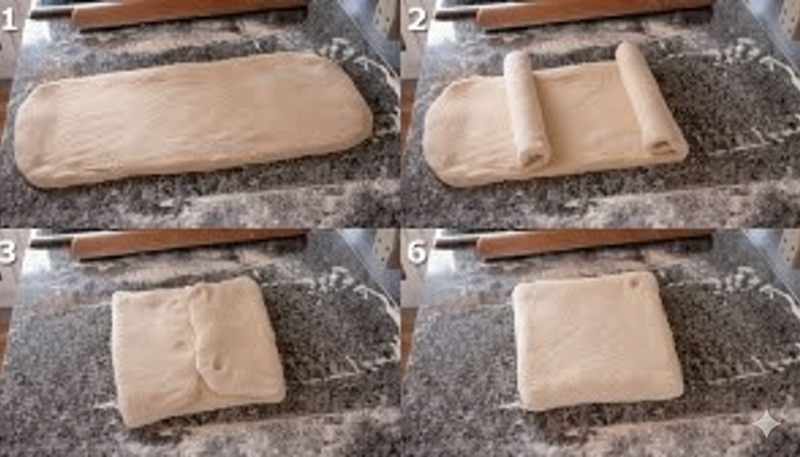

Common Folding Methods & Layer Counts
- Classic: 3 single folds → 27 layers (3 × 3 × 3).
- Alternative: 2 single + 1 double → more layers for taller rise.
- Fewer folds (e.g., modern techniques): Still achieve great honeycomb with better efficiency.
Rest dough 30-60 minutes in the fridge between turns to keep butter firm.


Tips for Success
- Work in a cool kitchen (<65°F/18°C).
- If butter breaks through, patch with flour and chill longer.
- Temperature control is key: Butter too cold → cracks; too warm → melts in.
- Practice makes perfect—your first batch might not be Lune-level, but it'll be delicious!
Ready to try laminating at home? It's challenging but so rewarding. What's your biggest croissant struggle—lamination, proofing, or shaping? Share below! 🥐🔥

Add comment
Comments